
Accuracy vs. Precision
The Difference That Makes Better Woodworkers

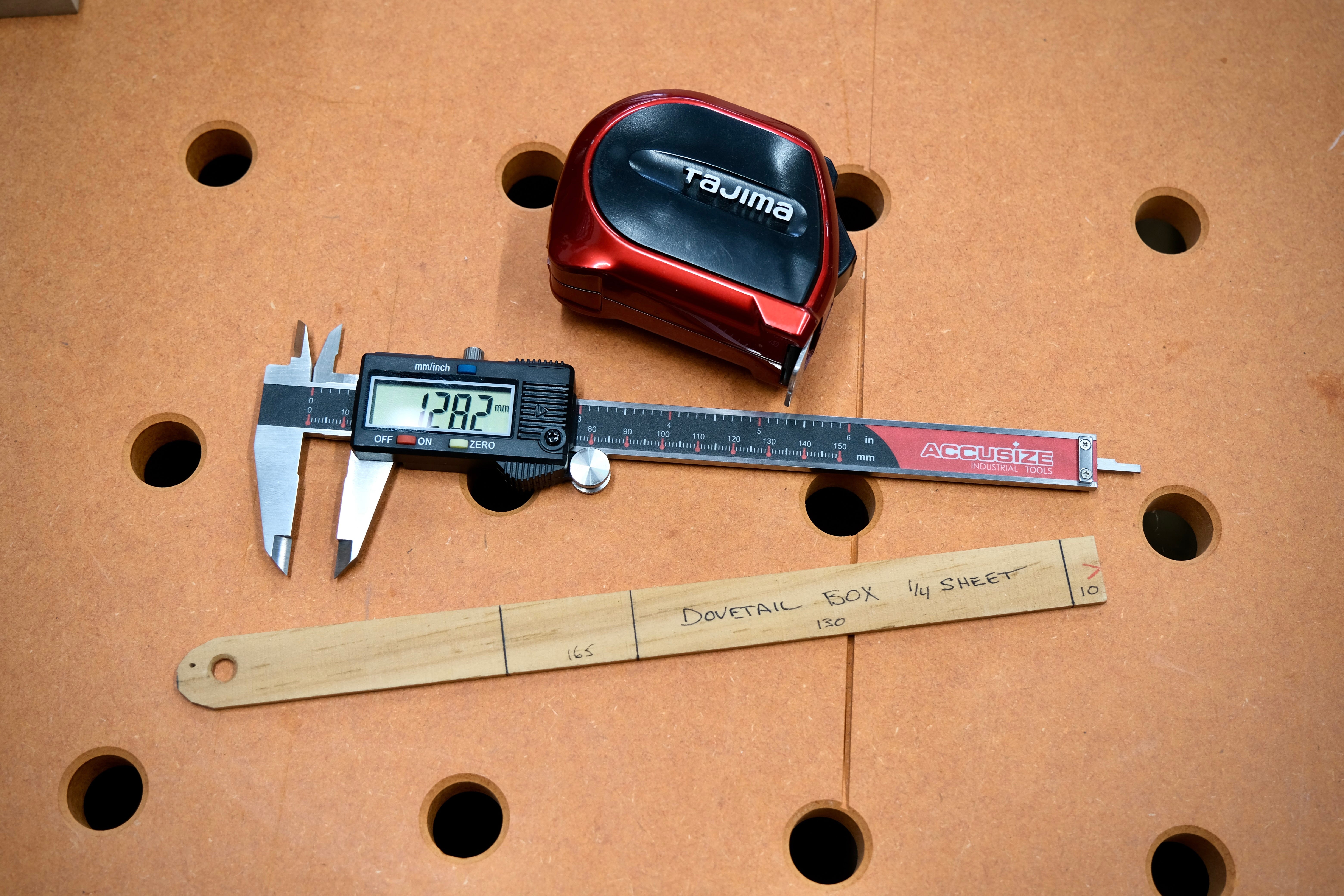
Woodworkers love numbers. We chase thousandths of an inch, obsess over digital readouts, and proudly tell our friends that we can cut a tenon within half a hair’s width of perfection.
Then we wonder why the joint doesn’t fit.
The problem is that we’ve confused accuracy with precision. They’re related, but they are not the same thing. More importantly, one of them matters a whole lot more in the shop.
Imagine you’re building a cabinet and the opening for a drawer measures 46.86 mm. Being accurate means making the drawer exactly 46.86 mm wide. Sounds reasonable, doesn’t it?
Except what if your tape measure is slightly off? What if the cabinet has moved with humidity? What if you measured from the wrong edge? What if your marking knife line wasn’t quite where you thought it was? You can be incredibly accurate to the wrong number.
Now think about precision. Precision is consistency. It’s making one part match another, working from the same reference face, and sneaking up on a fit until two pieces work together perfectly, regardless of what the ruler says.
That’s what furniture cares about.
A drawer doesn’t know it’s supposed to be 46.86 mm wide. It only knows whether it fits the opening. A mortise doesn’t care whether it’s exactly 10 mm wide. It only cares whether the tenon fits it.
Machines don’t assemble furniture. Parts assemble furniture.
This is why experienced woodworkers spend less time staring at rulers and more time using story sticks, setup blocks, test cuts, and reference surfaces. If I’m setting up a bandsaw to cut tenon cheeks, I’ll rarely dial in a measurement on the fence. Instead, I’ll make a test cut, compare it to the mortise, adjust, and repeat until it’s right.
Could I measure everything? Sure. Would it be faster? Almost never.
Measurements introduce opportunities for error. Every time you read a scale, transfer a dimension, or trust a printed number, you’ve added another chance for something to go sideways. Instead, transfer information directly from one part to another whenever possible. I have a funny saying that numbers lead math. Math leads to mistakes. Mistakes lead to swearing.
Need two rails the same length? Cut them together. Need shelves to fit between two sides? Measure the actual opening, not the drawing, with a story stick. Need to locate hinges? Mark directly from the part.
Every measurement you eliminate is one less opportunity to make a mistake.
This doesn’t mean accuracy isn’t important. If you’re laying out a building, installing kitchen cabinets, or making parts that must interchange with factory-made hardware, accurate measurements matter. But most furniture isn’t built that way.
Furniture is a collection of relationships. The top relates to the base. The drawer relates to the opening. The door relates to the cabinet. The tenon relates to the mortise.
Those relationships are governed by precision far more than accuracy.
I’ve watched students become frustrated because their measurements were “perfect,” yet nothing fit. Usually, the solution isn’t buying a more expensive measuring tool. It’s learning to stop chasing numbers and start chasing fit.
Ironically, when you focus on precision instead of accuracy, your projects usually become more accurate anyway. Not because your ruler got better, but because your process did.
The next time you’re in the shop, ask yourself one simple question: Can I transfer this dimension directly instead of measuring it?
More often than not, the answer is yes. And your woodworking will be better because of it.
In order to understand, you must do. - Vic
Great piece! I’ll add that the best way to learn this lesson that i know of is to work on boats- nothing is square to begin with, they shift n move over time n everything has to fit tight…
You know what would be great? If someone did a project video using a story stick. You see plenty of direct transfer, like dados and dovetails, but I have yet to see a story stick in use. I think Jim Tolpin said the pyramids were built with nothing but a stick so it must have some value.