
Stop Searching for Tools
What the military taught me about tool kits, efficiency, and staying in the flow

I spent 14 years in the Canadian Army, and whether I realized it or not, a lot of the systems we used for efficiency followed me into civilian life, and eventually into my woodworking shop.
This will be a theme in future posts because the military taught me a lot about systems, preparedness, and not wasting time doing dumb things twice. Today, though, I want to talk about tool kits.
In the artillery, we worked with a lot of equipment. Trucks, weapons systems, radios, aiming systems, generators, and enough gear to fill said truck.
One thing that was drilled into us was that equipment had to be kept in good order. Sometimes that equipment made life easier. Sometimes it protected you. And in some cases, it could save your life or the lives of others. That tends to sharpen your focus when it comes to maintenance.
Every major piece of equipment came with its own tool kit. Not a tool kit. Its tool kit.
If you were working on a vehicle, the tools you needed were there. If you were working on an aiming system, the required tools were there too. Nobody expected you to wander over to some giant communal toolbox and start rummaging around for a screwdriver while everyone waited.
The philosophy was simple: when you opened the kit, everything you needed to maintain or repair that piece of equipment was already there. That meant duplication.
You might have five identical 1/4” flat screwdrivers across five different kits, and nobody cared. Efficiency mattered more than purity. The goal wasn’t minimizing duplicate tools. The goal was minimizing wasted time.
And if someone borrowed a tool and failed to put it back? Let’s just say there were some very direct conversations.
Most kits also had checklists. You know how much I love a checklist. Every tool had a place. Before exercises or operations, we’d go through the list to make sure nothing was missing. If something had disappeared, you dealt with it before it became a problem. Because when time matters, hunting for tools is a terrible strategy.
Somewhere along the way, I realized I had adopted the same philosophy in my woodworking shop.
Almost every machine or specialty tool I own has a dedicated kit of essentials for setup, maintenance, or adjustment. Not because I’m obsessively organized, although some people would probably argue that point, but because it saves time and reduces frustration.
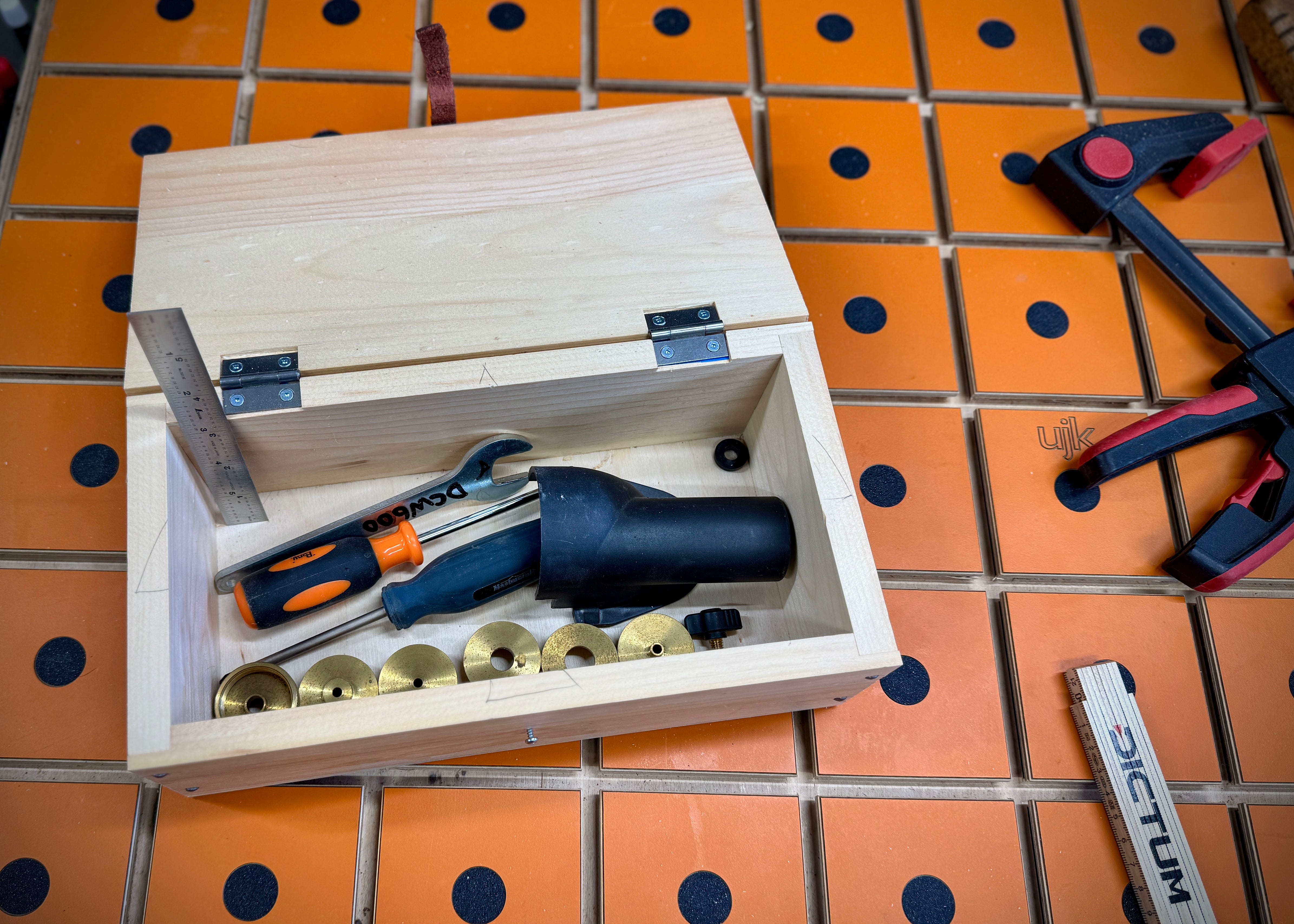
In the lead photo, you’ll see the tool kit I keep for one of my cordless routers that gets used constantly in the shop. Inside are all the things I regularly need to use that router effectively: screwdrivers, measuring tools, setup gauges, and wrenches.
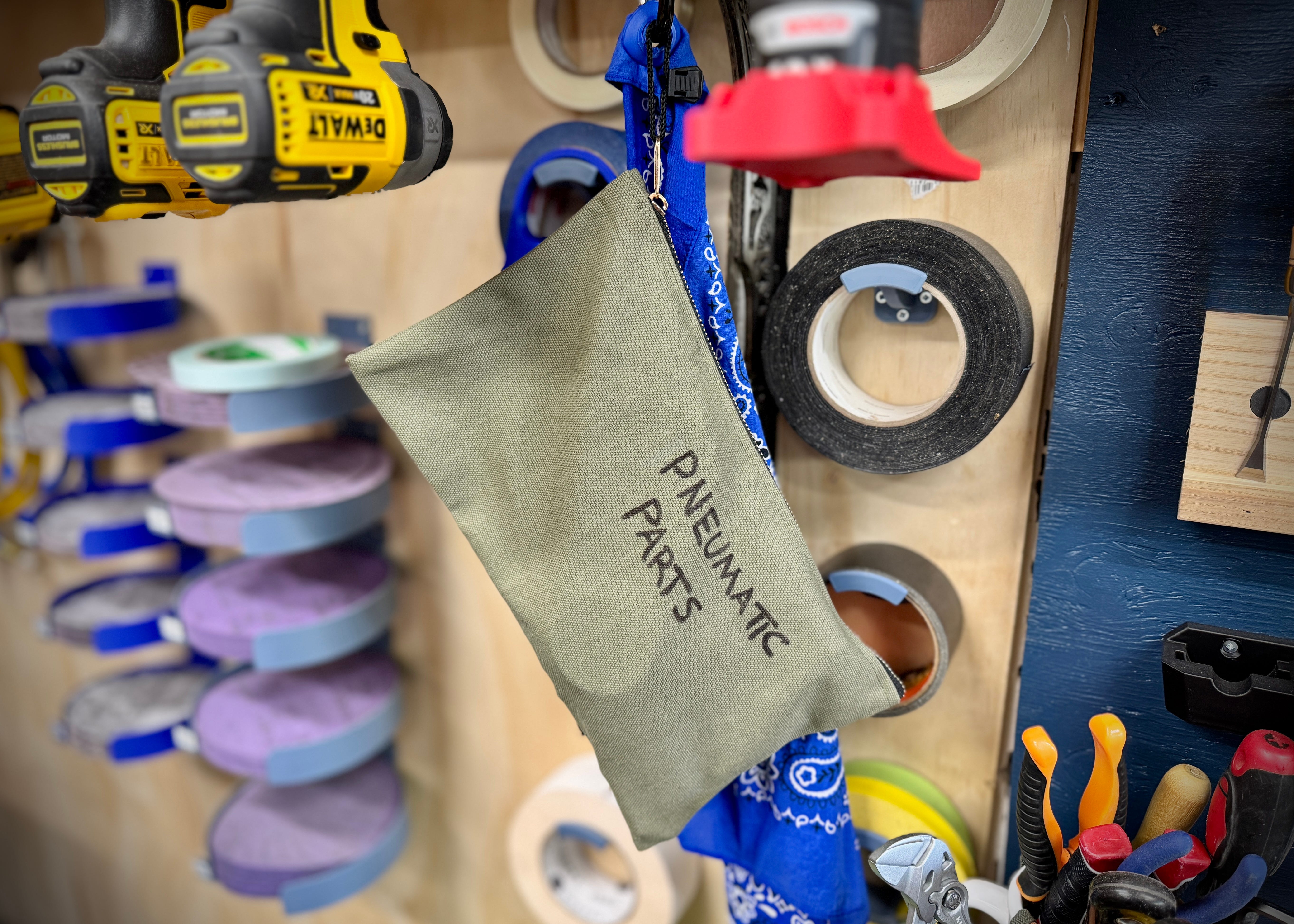
Everything lives together. Sometimes these kits live in a box or a fabric tool pouch. Think heavy duty pencil case. I don’t want to stop what I’m doing and start digging through drawers wondering where the correct wrench wandered off to three weeks ago.
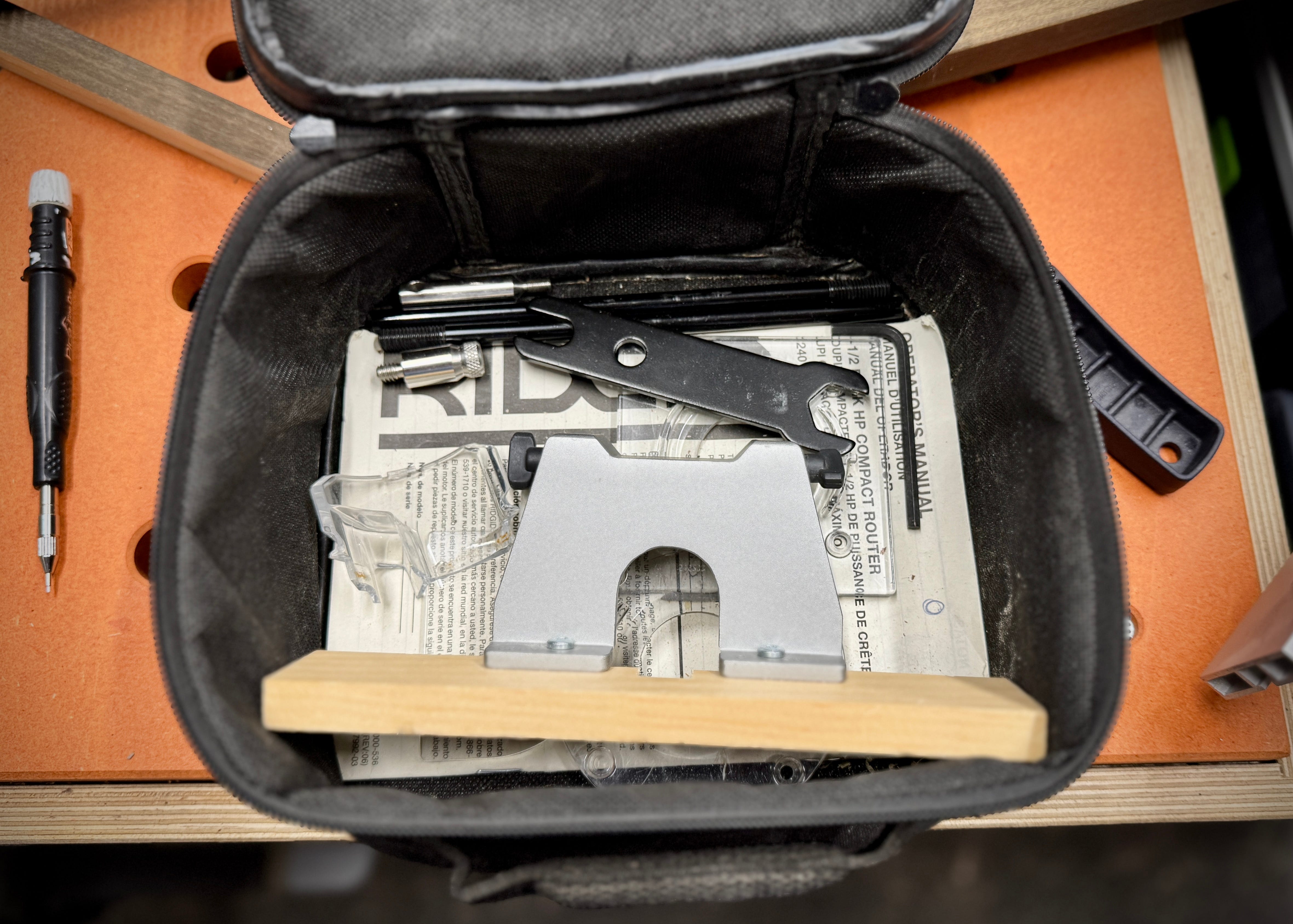
Routers are a perfect example. Most of mine use a 17 mm open-end wrench to tighten and loosen the collet. Could I own one wrench and share it between four or five routers?
Sure. Do I? Absolutely not.
Instead, I have four or five 17 mm wrenches, one living in each router’s dedicated kit.
Some people look at that and think it’s wasteful. I look at it and think it saves me ten minutes every time I switch tasks, and ten minutes saved repeatedly adds up fast. Especially when you’re trying to stay focused. Nothing kills momentum in the shop faster than breaking concentration to search for something you know you own but somehow can’t find.
You know the routine.
“I’ll just quickly grab that wrench.”
Twenty minutes later, you’ve reorganized half a drawer, uncovered three pencils, a rusty hinge, and a wrench from a machine you sold in 2018. But not the wrench you went looking for. So now you’re annoyed, distracted, and somehow less interested in the project than you were half an hour ago.
If I discover a kit is missing something, I add it immediately. I’ve got an ever-growing pile of spare tools that act as a donor bank. Allen wrenches are a great example. I have bins full of metric and imperial sizes collected over the years. There are plenty of duplicates in there, but that’s exactly the point.
Need a 4 mm hex key for a machine setup? Pull one from the bin. Add it to the kit. Problem solved. A lot of these tools are sourced from garage sales and have had a previous life. I’ve also inherited many tools from my father or others who have passed. Some people look at these inheritances as junk or something you have to store and never use but I add them to the pot. Sometimes I donate them to students or add them to other tool kits that don’t live in the shop but they always seem to get used.
I also keep centralized master sets of tools organized by size and type. These are my reference sets. If a machine doesn’t already have a dedicated kit, I can quickly grab a complete set, identify what I need, and get back to work.
The important rule? Those master kits don’t get pilfered. Because the moment your “master” set becomes incomplete, the whole system starts falling apart.
This approach worked in the military, and it works just as well in the shop.
Less fuss. Less frustration. Less wandering around muttering to yourself while looking for a wrench you swear was right there yesterday.
Just uninterrupted work. And honestly, uninterrupted work is where it’s at.
In order to understand, you must do. - Vic
Check out more at victesolinwoodworks.com
One of my former math prof geeky hobbies is collecting slide rules. I have a few “load rules” for USAF cargo and bomber aircraft. They were used by the loadmaster to insure, among other things, that the CG was in located safely. Each rule was calibrated to its aircraft and by standing order was not allowed to leave the aircraft. Still looking for a Soviet load rule.
I really like that. The though of not wasting time hunting around for a tools by using kits is brilliant.
I'm pretty faithful about putting stuff back.... Until I don't and when I need it... Well you know... Kits would really help
..... As well as a verision of mitten strings for my tape measures. Guess that might be another blog post.