
The Case for the Pilot Hole
How one offhand remark reshaped the way I work in the shop.

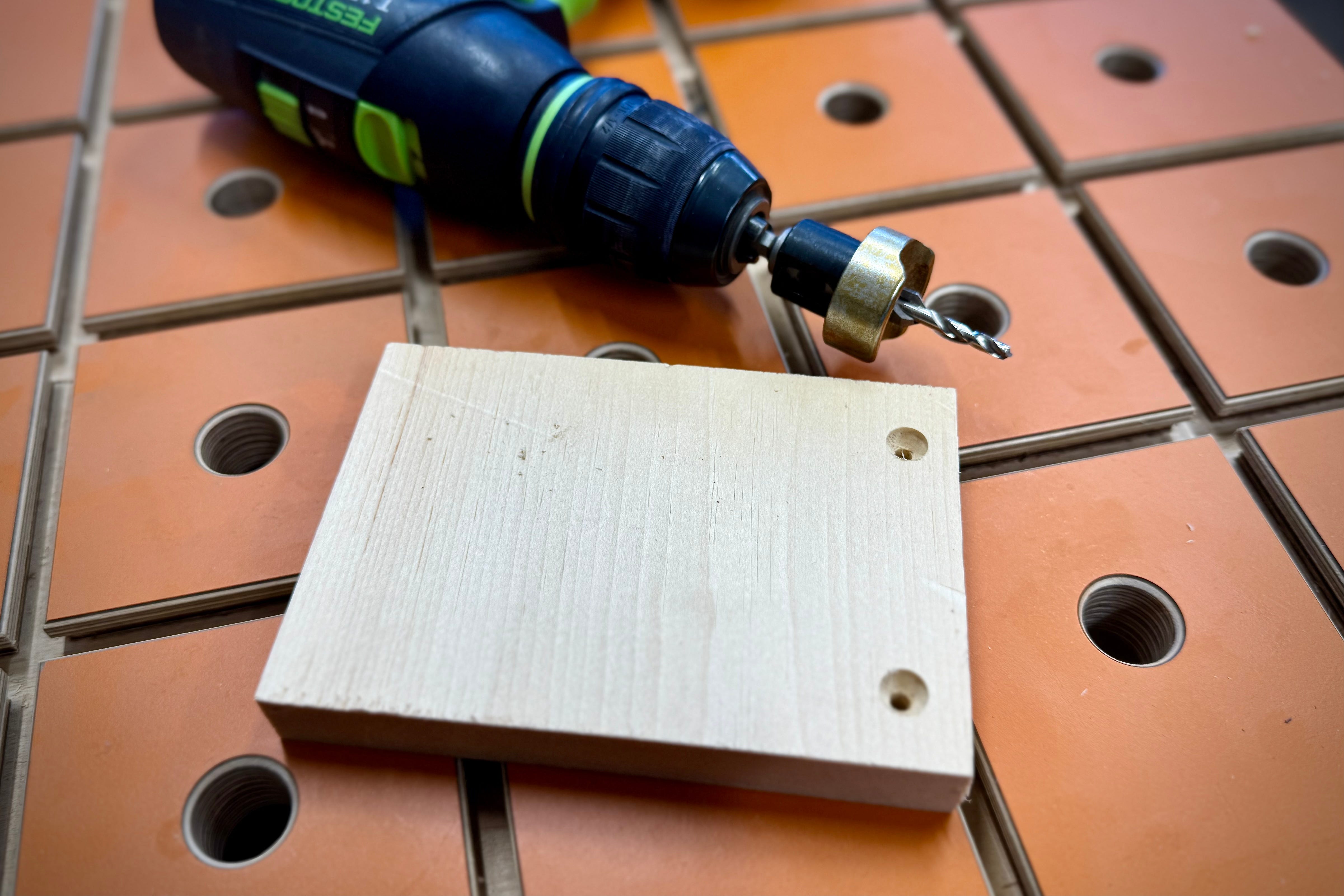
Years ago, when I was a student at Rosewood Studio, the instructors rotated through. That was intentional. Different teachers meant different habits, different priorities, and different ways of thinking about the same work. It kept us from believing there was only one right way to do things.
One day, Michael Fortune was in-house teaching. I was in the machine room, knocking together a quick plywood jig. Nothing fancy. Just something to hold a part where I needed it. I lined things up, grabbed a screw, and was about to drive it home without drilling a pilot hole.
Michael walked in at exactly the wrong moment.
He paused and said, “You’re going to drill pilot holes first, aren’t you?”
I said, “No. It’s just a jig.”
He didn’t raise his voice. He didn’t lecture. He just replied, “Driving screws into anything without drilling a pilot hole first is an inelegant thing to do,” and walked out of the room.
That stopped me cold.
At first, I brushed it off. It was a jig. Temporary. Who cares if it’s a little rough? But the comment stuck. I stood there with the drill in my hand and replayed it a few times.
He was right.
Without a pilot hole, the two pieces don’t always pull together cleanly. The screw can jack them apart instead of drawing them tight. The head chews up the surface as it tries to bury itself wherever it wants. In plywood, you get mushrooming and tear-out. In solid wood, you are flirting with a split.
None of that is elegant.
More importantly, none of it is necessary.
Drilling a pilot hole takes seconds. It costs nothing. It removes uncertainty. The screw does what it is supposed to do instead of fighting the material.
That moment rewired something for me.
Since that day, I drill pilot holes before driving screws. Always. I might skip them in construction material or 2-bys when the stakes are low, but even then I feel a little twinge of guilt. I can still picture Michael peering over his glasses at me.
This lesson had nothing to do with jigs. It had everything to do with mindset.
How you treat the throwaway parts of your work is how you treat the important ones. Sloppy habits do not stay contained. They bleed into everything else you do in the shop.
Slow down. Do it properly. Don’t just moose* a screw in there and hope for the best.
Elegance is often quiet. It shows up in the things no one else will ever notice.
In order to understand, you must do. - V
*moos·ing
/ˈmuː.zɪŋ/
verb (informal, shop slang)
1. The act of applying unnecessary force, aggression, or brute confidence to a task that clearly requires finesse, patience, or basic thought.
Commonly observed when someone drives a screw without a pilot hole, tightens a clamp until the wood begs for mercy, or “persuades” a joint together with a mallet and hope.
2. A behavioural condition marked by bullish momentum and an assumption that more power will solve a problem caused by not slowing down in the first place.
Side effects may include split stock, stripped threads, ugly surfaces, and the quiet shame that follows.
Usage:
“Don’t moose that screw in there, eh? Drill a pilot hole first.”
“She wasn’t fitting the joint, he was moosing it.”
Etymology:
From moose, the large North American mammal known for moving through dense forests with total indifference to subtlety, elegance, or the thoughts of others.
Antonym:
craftsmanship
See also:
forcing it, bulldozing, steamrolling, white-knuckling
"Sloppy habits do not stay contained. They bleed into everything else you do in the shop."
Exactly! It's that mindset that always asks How little can I get away with? It's that mindset that never lets you improve because your heart's not in it ... not really -- when everything is just another bothersome task, done reluctantly. Where's the fun in that?
The true game is: How well can I do this? How good can I get?
Great Article. I would love to hear more Stories about Michael.